Understand results guide

Carrier Status

Carrier status* testing identifies people who carry one pathogenic variant for a recessive disease. Carriers are typically unaffected; the significance is reproductive. This guide covers interpreting carrier findings, when partner testing matters, and what patients need to understand.

  • CLIA Certified
  • CAP Accredited
  • HIPAA Compliant
  • 300+ Peer-Reviewed Publications
  • FDA-Authorized Reports

Orienting to the report

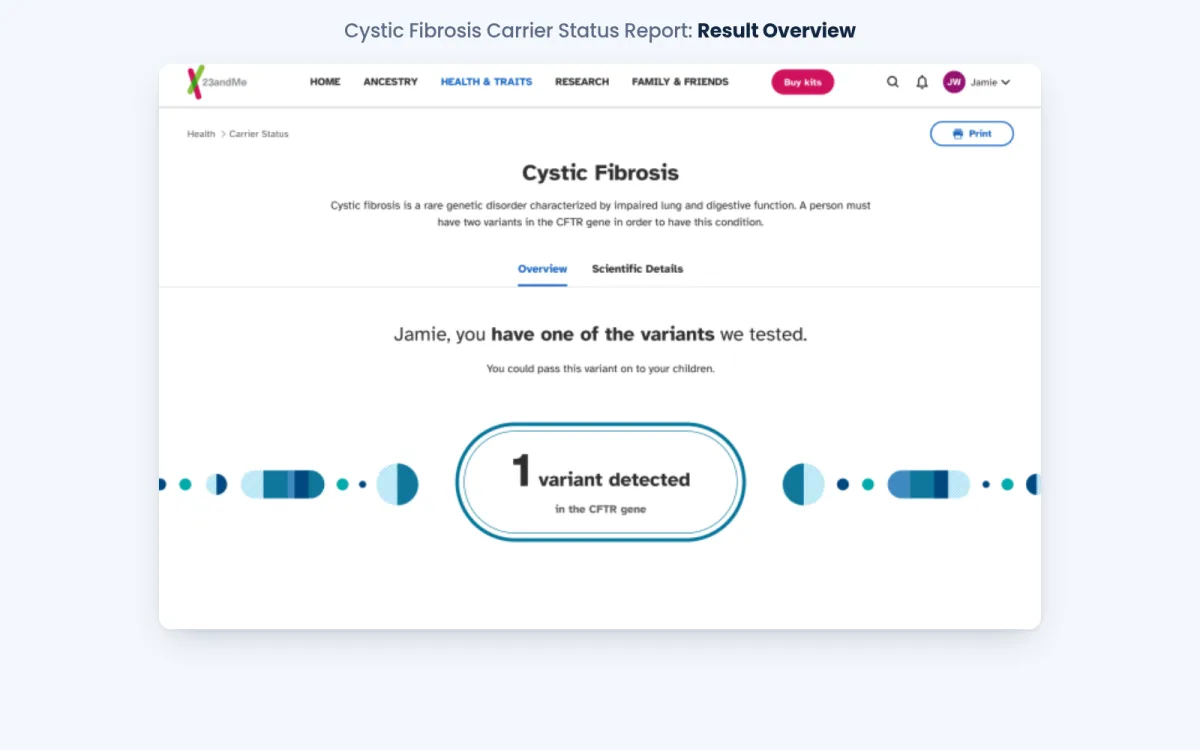
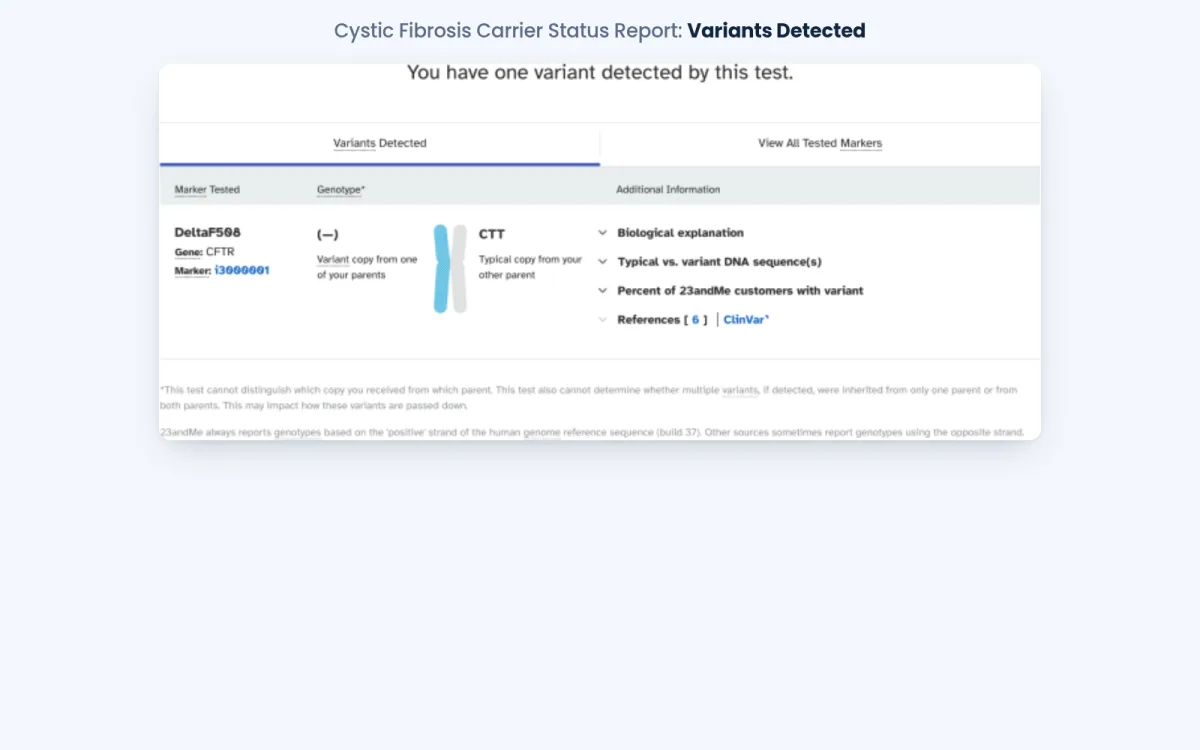
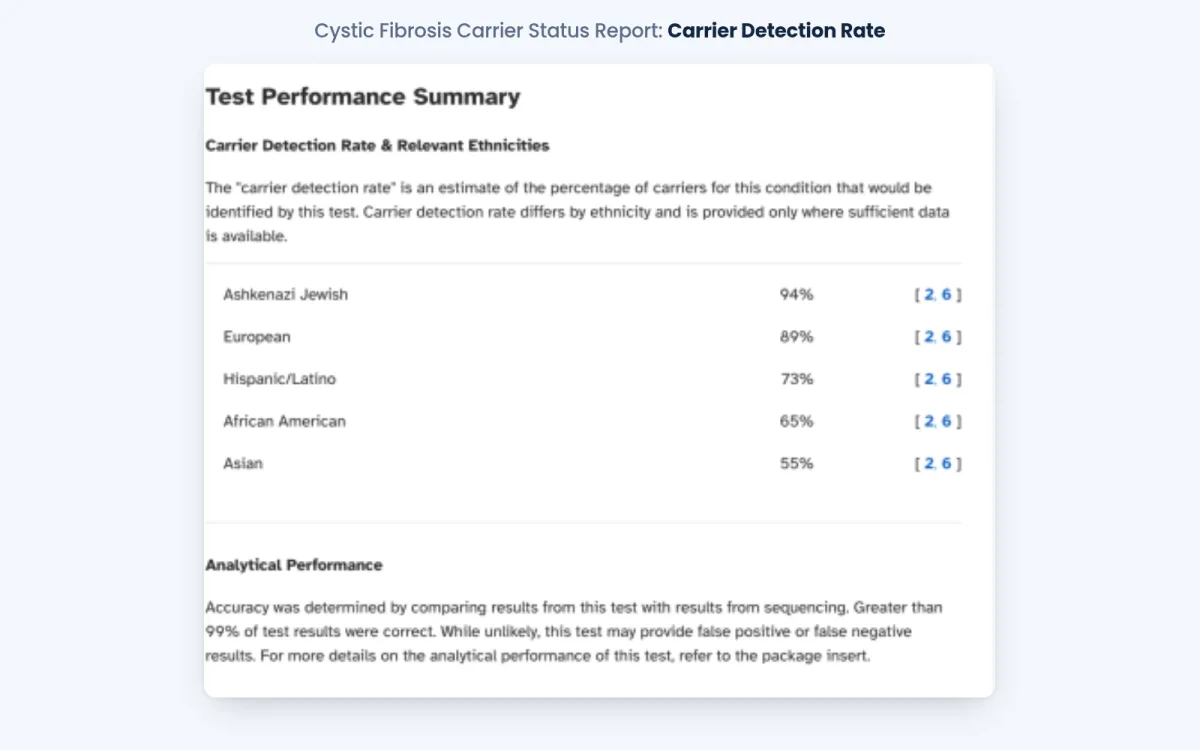
Each Carrier Status report covers a single condition. It names the gene and the select variants tested, since this is genotyping-based testing rather than full gene sequencing, and reports whether any of those variants were detected. Reports also include carrier detection rates for relevant ethnicities, which inform residual risk counseling.

Key framing for clinical use: For most patients, a carrier result has no effect on their personal health. Its significance is reproductive: for an autosomal recessive condition, when both partners carry a variant in the same gene, each pregnancy carries a 25% chance the child is affected.

Carrier report
Carrier report · Result overview: variants detected and the gene tested

1 of 3

Result outcomes

Condition spotlights

Clinical context for some of the autosomal recessive conditions covered by 23andMe.

Clinical resources

Sample reports, clinical downloads, educational videos, and external references all collected in one place.

Go to Resources →

Questions about a specific result? Contact our clinical team at medical@23andme.com

Frequently asked questions

Important test information

* Genetic Health Risk, Carrier Status & PRS reports: The 23andMe PGS test includes health predisposition and carrier status reports. Health predisposition reports include both reports that meet FDA requirements for genetic health risks and PRS reports which are based on a genetic model that includes data and insights from 23andMe consented research participants, and have not been reviewed by the FDA. The test uses qualitative genotyping to detect select clinically relevant variants in the genomic DNA of adults from saliva for the purpose of reporting and interpreting genetic health risks and reporting carrier status. It is not intended to diagnose any disease. Your ethnicity may affect the relevance of each report and how your genetic health risk results are interpreted. Each genetic health risk report describes if a person has variants associated with a higher risk of developing a disease, but does not describe a person’s overall risk of developing the disease. Each PRS report describes if a person has a certain likelihood of developing a condition, but does not describe a person’s overall likelihood. The test is not intended to tell you anything about your current state of health, or to be used to make medical decisions, including whether or not you should take a medication, how much of a medication you should take, or determine any treatment. Our carrier status reports can be used to determine carrier status, but cannot determine if you have two copies of any genetic variant. These carrier reports are not intended to tell you anything about your risk for developing a disease in the future, the health of your fetus, or your newborn child's risk of developing a particular disease later in life. For certain conditions, we provide a single report that includes information on both carrier status and genetic health risk. Warnings & Limitations: The 23andMe PGS Genetic Health Risk Report for BRCA1/BRCA2 (Selected Variants) is indicated for reporting of 44 variants in the BRCA1 and BRCA2 genes. The report describes if a person's genetic result is associated with an increased risk of developing breast cancer and ovarian cancer and may be associated with an increased risk for prostate cancer, pancreatic cancer, and potentially other cancers. The variants included in this report do not represent the majority of the BRCA1/BRCA2 variants in people of most ethnicities. This report does not include variants in other genes linked to hereditary cancers and the absence of variants included in this report does not rule out the presence of other genetic variants that may impact cancer risk. This report is for over-the-counter use by adults over the age of 18, and provides genetic information to inform discussions with a healthcare professional. The PGS test is not a substitute for visits to a healthcare professional for recommended screenings or appropriate follow-up. Results should be confirmed in a clinical setting before taking any medical action. For important information and limitations regarding each genetic health risk and carrier status report, visit 23andme.org/shop/test-info/