Black Friday: save up to 60% off



Our services
Choose your plan
Choose your plan based on what you want to learn about yourself and your family. You can also compare every 23andMe DNA test side-by-side.
Basic Ancestry
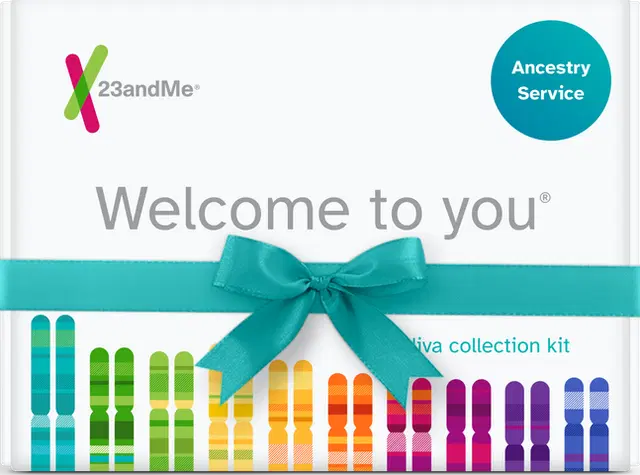
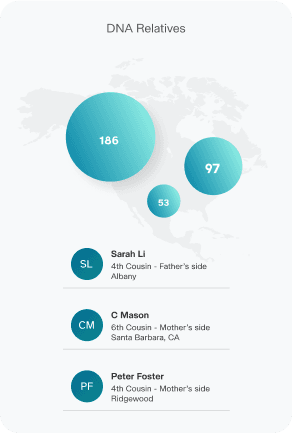
Start with your present. Uncover your geographic origins, build your family tree, and connect with living DNA relatives.
Premium Ancestry
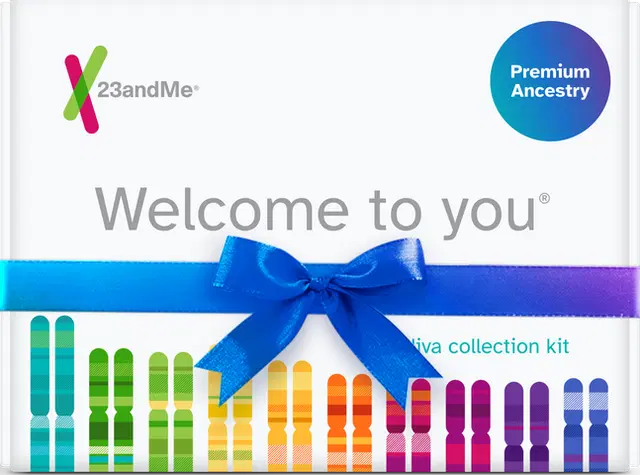
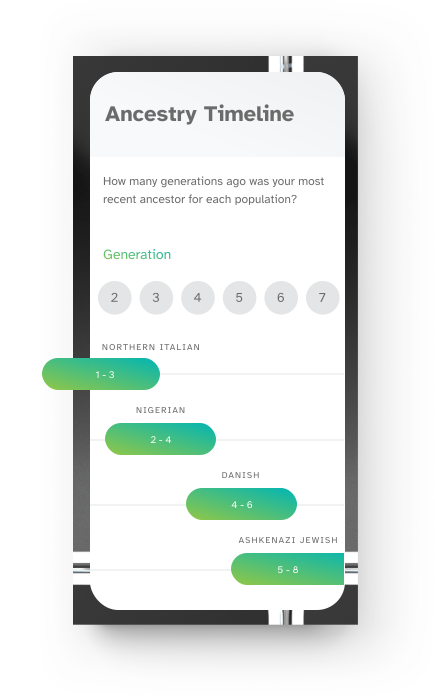
Trace the generations before you. Reconstruct your ancestors, find historical matches, and explore the ancient lineages written into your DNA.
Premium Ancestry + Health

Protect the generations to come. Everything in Premium Ancestry, plus 50+ genetic health screenings and carrier reports for risks worth knowing, for you and your future children.
Limit 4. Offer ends Nov 30.
* New members get a 1-month free trial on either plan. After the trial, your membership automatically renews every year at $69 (Premium Ancestry) or $99 (Premium Ancestry + Health) until you cancel. Cancel anytime.
Connect the dots between past, present, and future you.
Best in class genotyping-based DNA testing experience combines the most comprehensive ancestry breakdown with 100+ health reports and insights. Plus ongoing information based on your DNA as the science becomes available.
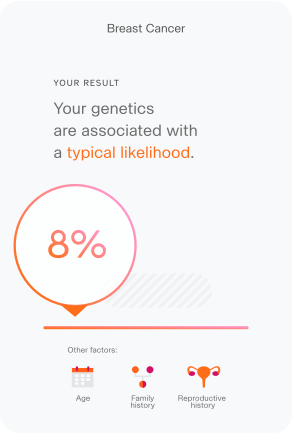
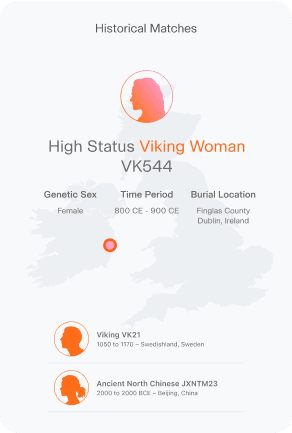

There’s more to your story.
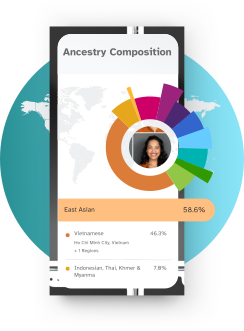
Understand the larger context of where you come from, breaking down your genetic ancestry to the 0.1%. It's the most comprehensive genetic breakdown on the market, helping you gain a more complete portrait of yourself.
How DNA testing with 23andMe works
Get your results with a 23andMe kit in three simple steps.
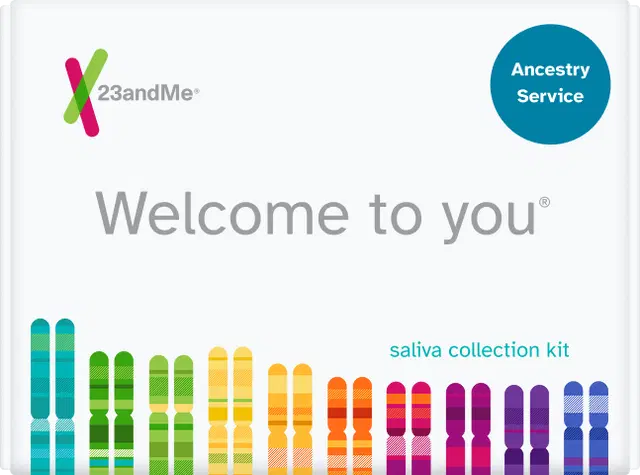
- Collect at homeRegister your kit, then provide a saliva sample and mail it back in the prepaid return package.
- Analyzed in a U.S. labYour sample goes to a CLIA-certified, CAP-accredited lab in the U.S. to be analyzed.
- Explore your reportsYour results arrive in your secure 23andMe account, with new reports added for members as the science develops.
Privacy by design
Privacy and security are built into how we handle your personal and genetic data at every step. Read more about our enhanced measures designed to keep you in control and your data safe.
Learn moreFAQ: Things you might be wondering about DNA testing
23andMe test results are held to rigorous scientific standards. Our Ancestry Composition compares your DNA with one of the largest reference datasets in the world to estimate your ancestry across 5,000+ regions, down to 0.1%, with precision above 90% for the vast majority of populations. For health, each variant in our Genetic Health Risk and Carrier Status reports showed more than 99% accuracy in validation testing, and in 2017 23andMe became the first company the FDA authorized to offer genetic health risk reports directly to consumers. Our scientists develop every report, medical experts are also involved in our health reports, and every sample is processed in a CLIA-certified lab.
At-home genetic DNA tests like 23andMe let you screen for selected variants without a doctor's order, while a clinical genetic test is ordered by a healthcare professional. Clinical genetic tests are typically ordered to diagnose a condition or check for inherited risk in people with a family history, with insurance often covering the cost. If you have a personal or family history of a condition, talk with your doctor or a genetic counselor about clinical testing. 23andMe Total Health adds clinician-ordered exome sequencing of 100+ genes.
A 23andMe genetics test has one main downside: A screening result can't rule out risk. Reports look at selected variants, so they can miss genetic changes a clinical gene test may find. Unlike a test your own doctor orders, 23andMe results don't go into your doctor's records unless you share them. Life, disability and long-term care insurers can still ask about genetic information when you apply, but 23andMe won't voluntarily share your results with them.
After you provide a saliva sample, 23andMe uses genotyping to analyze your DNA. This means we look at specific locations in your genome that are known to differ between people. We then turn those results into personalized genetic reports on everything from ancestry composition to traits to genetic health risks. Note that genotyping is different from DNA sequencing, which looks at every letter in a particular stretch of DNA.
23andMe genetic DNA testing starts at $99 for Basic Ancestry, a one-time kit with no membership to renew. Premium Ancestry is $149 and includes a 1-month free trial, after which membership renews at $69 a year. Premium Ancestry + Health is $199 and also includes a 1-month free trial, after which membership renews at $99 a year. Premium Ancestry + Total Health adds exome sequencing and blood testing for $499, with a $199 yearly renewal. You can use FSA or HSA funds for the health plans.
23andMe is designed for adults: anyone 18 or older who can provide a saliva sample can use the test. Each person needs their own kit, and a kit given as a gift is registered by the recipient, who creates their own account. A few medical situations can affect results. For example, if you've had a bone marrow transplant, your saliva may contain DNA from your donor. Learn more about who can use 23andMe.
23andMe results usually arrive a few weeks after your sample reaches the lab. After you order a DNA test online, register your DNA testing kit at www.23andme.org/start, provide a saliva sample, then put the kit in the mail. The return tracking link on your profile homepage shows your kit's progress, with your online DNA test results delivered to your secure account.
Yes, every 23andMe DNA test kit has a "Collect saliva by" date on the side of the collection tube. Provide your DNA sample before that date. If your sample collection kit is lost or damaged, or if it has expired, please contact customer care to assist you with getting a replacement kit.
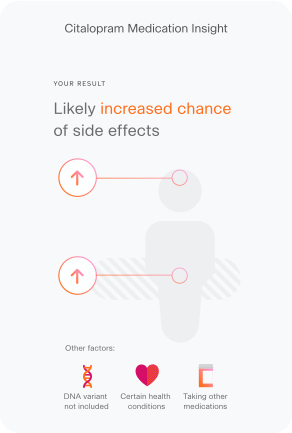
A 23andMe DNA test with Premium Ancestry + Health screens for 50+ health conditions, including late-onset Alzheimer's disease and hereditary breast and ovarian cancer risk from selected BRCA1/BRCA2 variants. It also includes 45+ carrier status reports for conditions you could pass on to your children, along with Pharmacogenetics reports on how your body may process certain medications. Note that your results can point to increased risk but do not diagnose a condition.
Stay in the know
Your DNA has more to tell you.
Keep up to date with new discoveries and exclusive promotions on our DNA testing kits and member services.
By subscribing you agree to our Privacy Statement. Unsubscribe anytime.
 Ancestry insights across 5,000+ regions
 Bank-grade encryption. You control your data.
 Tested in CLIA-certified US labs
 14M+ people have explored their DNA
**The 23andMe PGS test includes health predisposition and carrier status reports. Health predisposition reports include both reports that meet FDA requirements for genetic health risks and reports which are based on 23andMe research and have not been reviewed by the FDA. The test uses qualitative genotyping to detect select clinically relevant variants in the genomic DNA of adults from saliva for the purpose of reporting and interpreting genetic health risks and reporting carrier status. It is not intended to diagnose any disease. Your ethnicity may affect the relevance of each report and how your genetic health risk results are interpreted. Each genetic health risk report describes if a person has variants associated with a higher risk of developing a disease, but does not describe a person’s overall risk of developing the disease. The test is not intended to tell you anything about your current state of health, or to be used to make medical decisions, including whether or not you should take a medication, how much of a medication you should take, or determine any treatment. Our carrier status reports can be used to determine carrier status, but cannot determine if you have two copies of any genetic variant. These carrier reports are not intended to tell you anything about your risk for developing a disease in the future, the health of your fetus, or your newborn child's risk of developing a particular disease later in life. For certain conditions, we provide a single report that includes information on both carrier status and genetic health risk. Warnings & Limitations: The 23andMe PGS Genetic Health Risk Report for BRCA1/BRCA2 (Selected Variants) is indicated for reporting of 44 variants in the BRCA1 and BRCA2 genes. The report describes if a person's genetic result is associated with an increased risk of developing breast cancer and ovarian cancer and may be associated with an increased risk for prostate cancer, pancreatic cancer, and potentially other cancers. The variants included in this report do not represent the majority of the BRCA1/BRCA2 variants in people of most ethnicities. This report does not include variants in other genes linked to hereditary cancers and the absence of variants included in this report does not rule out the presence of other genetic variants that may impact cancer risk. This report is for over-the-counter use by adults over the age of 18, and provides genetic information to inform discussions with a healthcare professional. The PGS test is not a substitute for visits to a healthcare professional for recommended screenings or appropriate follow-up. Results should be confirmed in a clinical setting before taking any medical action. For important information and limitations regarding each genetic health risk and carrier status report, visit 23andme.com/shop/test-info/
***23andMe PGS Pharmacogenetics reports: The 23andMe test uses qualitative genotyping to detect 3 variants in the CYP2C19 gene, 2 variants in the DPYD gene and 1 variant in the SLCO1B1 gene in the genomic DNA of adults from saliva for the purpose of reporting and interpreting information about the processing of certain therapeutics to inform discussions with a healthcare professional. It does not describe if a person will or will not respond to a particular therapeutic. Our CYP2C19 Pharmacogenetics report provides certain information about variants associated with metabolism of some therapeutics and provides interpretive drug information regarding the potential effect of citalopram and clopidogrel therapy. Our SLCO1B1 Pharmacogenetics report provides certain information about variants associated with the processing of some therapeutics and provides interpretive drug information regarding the potential effect of simvastatin therapy. Our DPYD Pharmacogenetics report does not describe the association between detected variants and any specific therapeutic. Results for DPYD and certain CYP2C19 results should be confirmed by an independent genetic test prescribed by your own healthcare provider before taking any medical action. Warning: Test information should not be used to start, stop, or change any course of treatment and does not test for all possible variants that may affect metabolism or protein function. The PGS test is not a substitute for visits to a healthcare professional. Making changes to your current regimen can lead to harmful side effects or reduced intended benefits of your medication, therefore consult with your healthcare professional before taking any medical action. For important information and limitations regarding Pharmacogenetic reports, visit 23andme.com/shop/test-info/pharmacogenetics/