

Key Takeaways
|
About one million people in the U.S. have Crohn’s disease, one of the two main types of inflammatory bowel disease (IBD). But Crohn’s disease can be hard to recognize at first, because early symptoms overlap with more common conditions and often come and go over time.
Our new Crohn’s Disease Polygenic Risk Score report*, now available for 23andMe Premium Ancestry + Health members, can help you understand how your DNA impacts your likelihood of developing Crohn’s. It also provides information about common symptoms and non-genetic risk factors.
What is Crohn’s disease?
Crohn’s disease is a type of IBD, a group of conditions in which the immune system mistakenly attacks harmless bacteria in the gut, leading to chronic inflammation (see sidebar). Most people with Crohn’s are diagnosed between the ages of 15 and 35, but symptoms can develop at any age.
Crohn’s disease is one of two main types of inflammatory bowel disease (IBD), alongside ulcerative colitis (UC). There are a few key differences:
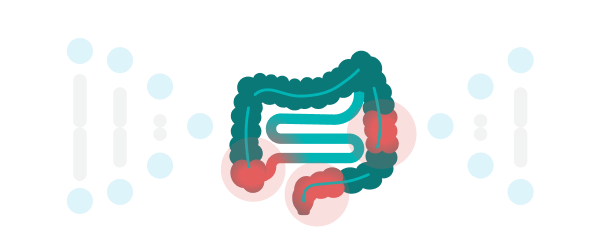
- Crohn’s disease can affect any part of the digestive tract from the mouth to the anus, whereas UC only affects the colon and rectum.
- In Crohn’s, patches of inflammation alternate with healthy sections of tissue, whereas UC usually impacts continuous stretches, starting at the rectum.
- Crohn’s disease impacts all layers of the intestinal wall, whereas UC only affects the innermost lining.
IBD is also different from irritable bowel syndrome (IBS), which can cause uncomfortable symptoms but doesn’t involve inflammation or cause damage to the digestive tract.
Common symptoms of Crohn’s disease include abdominal pain, diarrhea, fatigue, reduced appetite and unintended weight loss, which sometimes come and go over time. Most people can manage their symptoms with ongoing medical treatment, which may include medication to reduce inflammation and calm an overactive immune response, and they lead full, active lives. But over time, chronic inflammation can lead to serious complications, including scarring and blockages in the intestine, abnormal tunnels called fistulas and an increased risk for colorectal cancer.
Crohn’s disease can also take an emotional toll. Flares can be unpredictable, which can make it hard to plan ahead for work, school, travel or social events. And needing frequent bathroom access can make everyday activities feel stressful. The Crohn’s & Colitis Foundation offers support to people experiencing the challenges of Crohn’s disease.
What causes Crohn’s disease?
The exact cause of Crohn’s disease isn’t fully understood. But scientists believe it involves an overactive immune response, where the immune system mistakenly attacks some of the trillions of harmless bacteria that normally live in our guts. This leads to ongoing inflammation that can cause damage over time.
Research suggests a strong genetic component to Crohn’s disease: an estimated 78% of the difference in risk between different people may be explained by DNA. Scientists have discovered hundreds of genetic variants associated with Crohn’s, including variants in genes like NOD2 (which helps sense bacteria inside our bodies), ATG16L1 (which helps cells engulf and destroy harmful microbes) and IL23 (which helps immune cells communicate with each other).
Besides genetics, many other factors can influence a person’s chances of developing Crohn’s disease. For example, people with a close family member with Crohn’s or another type of IBD are more likely to develop Crohn’s, as are people with Ashkenazi Jewish ancestry or who live in industrialized and urban environments. Smoking cigarettes can also increase risk. Some studies suggest that a healthy diet and regular exercise is associated with lower risk for Crohn’s.
Ways to Take Action
There’s no sure way to prevent Crohn’s disease. But for those experiencing symptoms, learning about your genetics may help reduce the time it takes to get a diagnosis.
For those who do develop Crohn’s, most need medication, and some may also need surgery or nutritional support. But certain lifestyle habits can also help manage symptoms and reduce the frequency of symptom flares. For example:
- Certain foods and drinks may trigger symptoms, such as spicy foods, dairy, caffeine and carbonated drinks. Keeping a food diary can help you identify potential triggers to avoid. It may also be helpful to keep an eye on medications like NSAIDs that can irritate the gut.
- Eating smaller, more frequent meals can be easier on the digestive system, and drinking lots of water throughout the day can help counter fluid loss from diarrhea.
- Stress can sometimes worsen Crohn’s symptoms, so staying active, getting plenty of sleep and practicing relaxation techniques may help.
- Smoking cigarettes is linked to more frequent and severe flares. If you need help quitting, smokefree.gov offers support and resources.
People with Crohn’s disease also have a higher risk of developing colorectal cancer, so experts recommend getting earlier and more frequent screening colonoscopies to catch potential cancers and pre-cancers.
Learn About Your Genetics
The Crohn’s Disease PRS report was made possible thanks to millions of 23andMe customers who have consented to participate in research. Their contributions help our scientists make genetic discoveries that benefit the entire research community and allow us to develop new reports and features for our members.
If you’re a 23andMe Premium Ancestry + Health member, you can now access the new Crohn’s Disease PRS report (along with your other Health Predisposition reports) to see how your genetics may influence your chances of developing Crohn’s disease.
Note: Due to limited data, the PRS powering this report failed to meet our performance standards for members of East and Southeast Asian descent. Members with these ancestries are not able to receive a personalized genetic result at this time. We hope with additional data and research we may be able to provide these members a result in the future.
* The 23andMe Crohn’s Disease PRS report is based on a genetic model that includes data and insights from 23andMe consented research participants and incorporates more than 2,000 genetic variants to provide information on the likelihood of being diagnosed with Crohn’s disease. The report does not describe a person’s overall likelihood, does not account for lifestyle or family history and has not been reviewed by the US Food and Drug Administration. The Crohn’s Disease PRS report is not intended to tell you anything about your current state of health, or to be used to make medical decisions or determine any treatment.


