
Key Takeaways
|
More than a million Americans are living with hereditary hemochromatosis, and many are unaware of the condition. July is National Hemochromatosis Screening and Awareness Month, a fitting moment to ask why a condition this common stays so quiet.
Hereditary hemochromatosis is a genetic condition that causes your body to absorb more iron from food than it needs. Since the body has no efficient way to get rid of the extra iron, it slowly builds up in the liver, heart, joints and other organs, where it can cause lasting damage over time. The good news: once caught, it’s highly treatable. The challenge is catching it.
Symptoms Vague Enough to Miss
Not everyone with hereditary hemochromatosis develops iron overload. Among people who do, fatigue and joint pain are the most common symptoms among people with hemochromatosis, but both show up in dozens of other conditions, which is exactly why diagnosis is often delayed. Some people also notice abdominal pain, memory fog, skin darkening, a drop in sex drive or heart flutters. Aching pain in the knuckles of the pointer and middle fingers, sometimes called “the iron fist,” is more specific to the condition, though not everyone experiences it.
For years, many clinicians were taught that hemochromatosis was rare and mostly a disease of older men, an assumption that made it easy to overlook in women and anyone else who didn’t fit that picture. That’s part of why genetic testing is useful. It can flag a predisposition before symptoms appear or before a doctor has reason to look for it.
Why Men and Women Experience It Differently
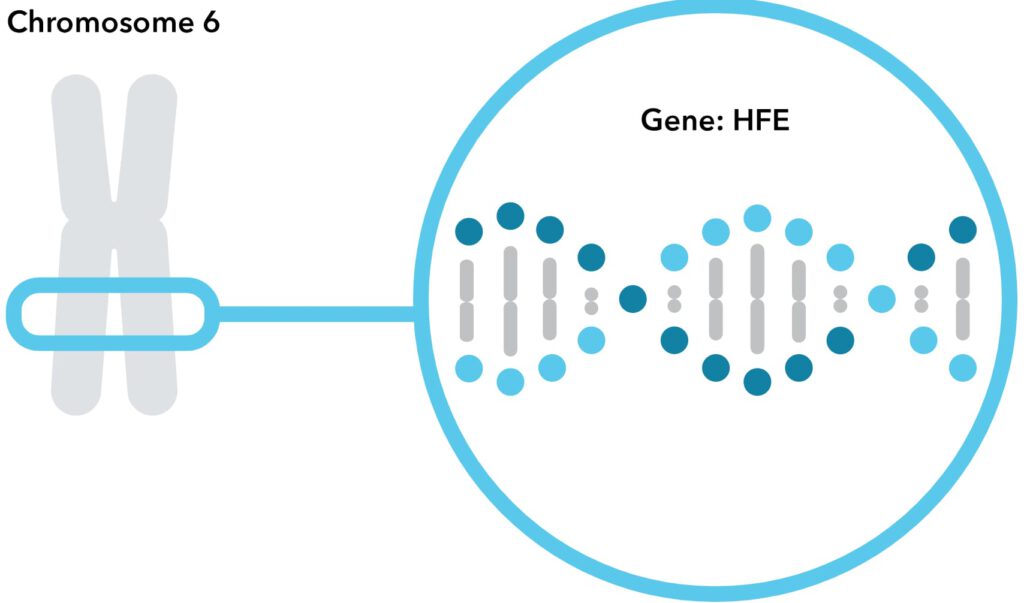
Genetically, hemochromatosis doesn’t discriminate. The HFE gene most often responsible sits on chromosome 6, not a sex chromosome, so men and women have the same chances of inheriting risk from their parents. What mostly differs is timing. Men often show symptoms starting in their 40s, while women more typically develop symptoms later after their periods stop.
The reason comes down to blood loss. A safe and effective treatment for hemochromatosis (in addition to limiting iron intake from foods or supplements) is regularly removing blood from the body. This causes the body to pull stored iron out of tissues like the liver, in order to replace iron-rich red blood cells. Menstruation causes women to regularly shed and replace red blood cells, a built-in, unintentional version of the treatment doctors prescribe today.
An Ancient Variant With a Modern Nickname
Thousands of years ago, people migrating into the British Isles likely carried the small changes in the HFE gene that may have helped their bodies hold onto iron during periods of scarcity. Two of those variants, C282Y and H63D, became especially common in Ireland. What once may have been a survival advantage is now linked to a condition nicknamed the “Celtic Curse,” since hemochromatosis disproportionately affects people with Irish and British ancestry.
What You Can Do
- Learn your family history. Ask relatives whether anyone has been diagnosed with hemochromatosis or unexplained liver disease.
- Ask about an iron panel. Transferrin saturation and ferritin blood tests can catch iron overload early, often before organ damage occurs.
- Learn about your genetics. Not everyone with HFE variants develops hemochromatosis, but knowing whether you carry these variants can prompt earlier monitoring, well before symptoms might show up.
- Act early if you’re diagnosed. Dietary changes and regular phlebotomy, essentially donating blood on a schedule, are simple and highly effective at preventing long-term damage.
Curious what your DNA says about your own hemochromatosis risk? 23andMe Health + Ancestry customers can check their Hereditary Hemochromatosis (HFE-Related) Genetic Health Risk report* to see whether they carry the most common variants most associated with this condition.
NOTE: Within this blog post, we use the words “men” and “women” to refer to people whose sex assigned at birth is male and female, respectively. However, we recognize that being categorized by birth sex may be an uncomfortable experience for some people. We do not mean to delegitimize anyone’s gender identity. Learn more about how 23andMe uses your genetic sex, birth sex and gender.
* The 23andMe PGS test uses qualitative genotyping to detect select clinically relevant variants in the genomic DNA of adults from saliva for the purpose of reporting and interpreting genetic health risks. It is not intended to diagnose any disease. Your ethnicity may affect the relevance of each report and how your genetic health risk results are interpreted. Each genetic health risk report describes if a person has variants associated with a higher risk of developing a disease, but does not describe a person’s overall risk of developing the disease. The test is not intended to tell you anything about your current state of health, or to be used to make medical decisions, including whether or not you should take a medication, how much of a medication you should take, or determine any treatment.
The Hereditary Hemochromatosis (HFE-Related) genetic health risk report is indicated for reporting of the C282Y and H63D variants in the HFE gene and describes if a person has variants associated with an increased risk of developing iron overload related to hereditary hemochromatosis. The variants included in this report are best studied in people of European descent.