
Key Takeaways
|
Every year on the third Saturday in October, International Archaeology Day invites people around the world to celebrate the discipline that lets us dig into the human past, quite literally. Archaeologists piece together the lives of people who lived hundreds or thousands of years ago from the traces they left behind: their homes, their tools, the objects they were buried with and increasingly their DNA.
This year, we have a second reason to celebrate. With this month’s update, 23andMe’s Historical Matches feature now includes more than 1,000 historical individuals. Each one represents years of careful work by archaeologists, museum curators and geneticists, and each one carries a story that can now connect to the people living today.
To mark both occasions, we’re highlighting new historical individuals whose archaeological stories we think are especially worth telling, from a pot burial in ancient Egypt to hanging coffins from the cliffs of southwest China. We’re also bringing back some old favorites, adding new individuals to groups that have proven especially popular with our community.
A Rare Glimpse of Old Kingdom Egypt
Ancient Egypt is one of the most famous civilizations in history, but ancient Egyptian DNA has been remarkably hard to come by. Egypt’s hot climate is poorly suited to preserving DNA, and until recently, genetic data from ancient Egypt was limited to partial genomes from a handful of individuals who lived thousands of years after the first pharaohs.
That changed with a 2025 study published in Nature, which reported the first whole genome from ancient Egypt. It belonged to a man who lived between 2855 and 2570 BCE, around the time the Great Pyramid of Giza was built. He wasn’t mummified. Instead, he was buried in a large pottery vessel inside a rock-cut tomb near the village of Nuwayrat, a burial style that may have helped preserve his DNA for more than 4,500 years. His skeleton showed signs of a lifetime of physical labor, and some researchers suggest that the patterns of wear are consistent with the work of a potter.
Most of his ancestry was best matched by older genomes from North Africa, but about one-fifth was most closely related to ancient people from the eastern Fertile Crescent, including Mesopotamia. This provides the first genetic evidence that contacts between early Egypt and Mesopotamia involved the movement of people, not just the exchange of goods and ideas.
Bronze and Iron Age Mesopotamia
Mesopotamia, the land between the Tigris and Euphrates rivers, was home to some of the world’s earliest cities and one of its earliest writing systems. Yet, much like Egypt, its harsh climate has made ancient DNA from the region scarce.
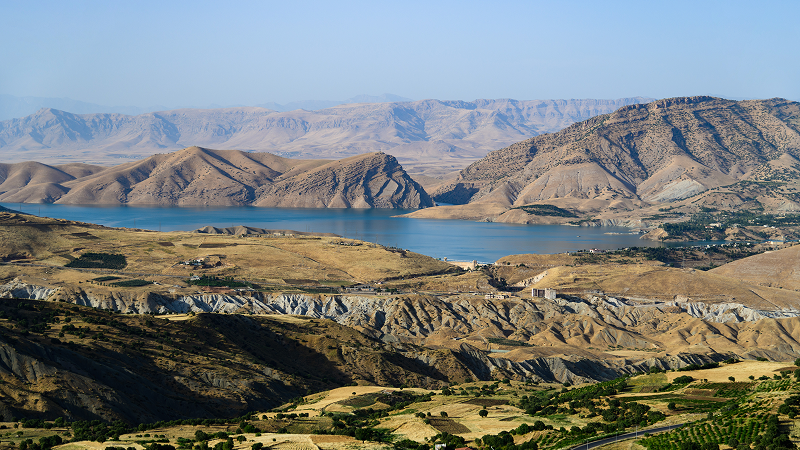
A 2026 study published in Genome Biology analyzed DNA from people buried at Bakr Awa, a large ancient settlement in present-day Iraqi Kurdistan that sat along routes connecting Mesopotamia and Iran. We’ve added nine of the individuals from this study to Historical Matches. The researchers found that the city’s Bronze Age residents had remarkably diverse ancestries, with genetic ties to Anatolia, the Levant and the Caucasus, mirroring the mix of cultures and languages recorded in ancient texts from the site.
The Hanging Coffins of Southwest China
For roughly 3,000 years, communities across southern China and Southeast Asia practiced a striking funerary tradition: placing the coffins of their dead high on cliff faces, in caves or in rock crevices, sometimes hundreds of meters above the ground. In southwest China, historical records attribute these hanging coffins to the Bo people, a group that largely disappeared from written history during the Ming Dynasty. Local legends describe the Bo as “Sons of the Cliffs,” and even say they could fly.

A 2025 study published in Nature Communications sequenced the genomes of people buried in hanging coffins, and we’ve added six of them to Historical Matches. Most shared ancestry with Neolithic populations from China’s southeastern coast, consistent with archaeological evidence that the tradition began there. But two women buried at the same site in Yunnan around 1,250 years ago had very different ancestries, linked to populations from northern China and Northeast Asia, suggesting that hanging coffin communities welcomed people from distant regions. Perhaps most strikingly, the researchers found that a small present-day Bo community in Yunnan inherited much of its ancestry from the people buried in these coffins, supporting long-standing oral traditions linking them to this custom.
Bringing Back Some Old Favorites
Alongside these new groups, we’re adding individuals to some of the most popular groups in the feature.
Our new Viking Age additions include two individuals buried in Sweden around the end of the Viking Age, both of whom had a rare inherited form of dwarfism. When their skeletons were first studied, archaeologists suspected they were closely related, but couldn’t tell whether they were brother and sister, mother and son or father and daughter. DNA analysis settled the question: they were siblings. Joining them is a young warrior from an elite cemetery at Bodzia, in present-day Poland, whose grave contained a belt fitting bearing the emblem of Prince Sviatopolk, a ruler of Kyiv in the early 11th century, hinting at connections stretching across medieval Europe.
The Sarmatian group is growing as well. The Sarmatians were a nomadic people who dominated the steppe grasslands north of the Black Sea before moving west and settling across the Great Hungarian Plain in the 1st century CE. For centuries, they were one of the major powers on the edge of the Roman world. Yet unlike many of the peoples they lived alongside, no modern nation claims them as ancestors, leading some researchers to call them a “forgotten people.” Ancient DNA is now helping to bring their story back into view.
We’re also adding individuals to our Iron Age Durotriges group from southern Britain, a community in which women stayed with their maternal families while men moved to live with their wives’ families.
Finally, we’re adding a medieval king to our Hungarian Royalty group. King Saint Ladislaus I ruled Hungary in the late 11th century, and his skull has been preserved as a relic for centuries. After a turbulent history that included a fire and a rescue during regional conflicts, historians had questioned whether the relic was authentic. Ancient DNA confirmed that it carries the same rare paternal lineage as other members of his dynasty.
Learn More
23andMe Premium members can explore whether they share a genetic connection with any of these newly added individuals, and with more than 1,000 others, through the Historical Matches feature.
And if you are interested in finding ways to celebrate International Archaeology Day, check out organizations like the Archaeological Institute of America, which has an exciting calendar of Archaeology-related events.